Diagnose the trap
Name the Effort-Dependence Trap inside your company — where growth keeps adding weight instead of leverage, and decisions keep routing back to you.
Summer 2026 · The AI-Era Business Book
For business owners, operators, managers, and executives whose business has grown heavier instead of lighter.
The action plan for scaling your business when hustle and AI both let you down.
In the tradition of The E-Myth, Traction, and Built to Sell — rewritten for the AI era.
For business owners and operators whose businesses have grown but feel heavier instead of lighter. Build the structure that makes growth — and AI — actually compound, instead of amplifying the chaos.
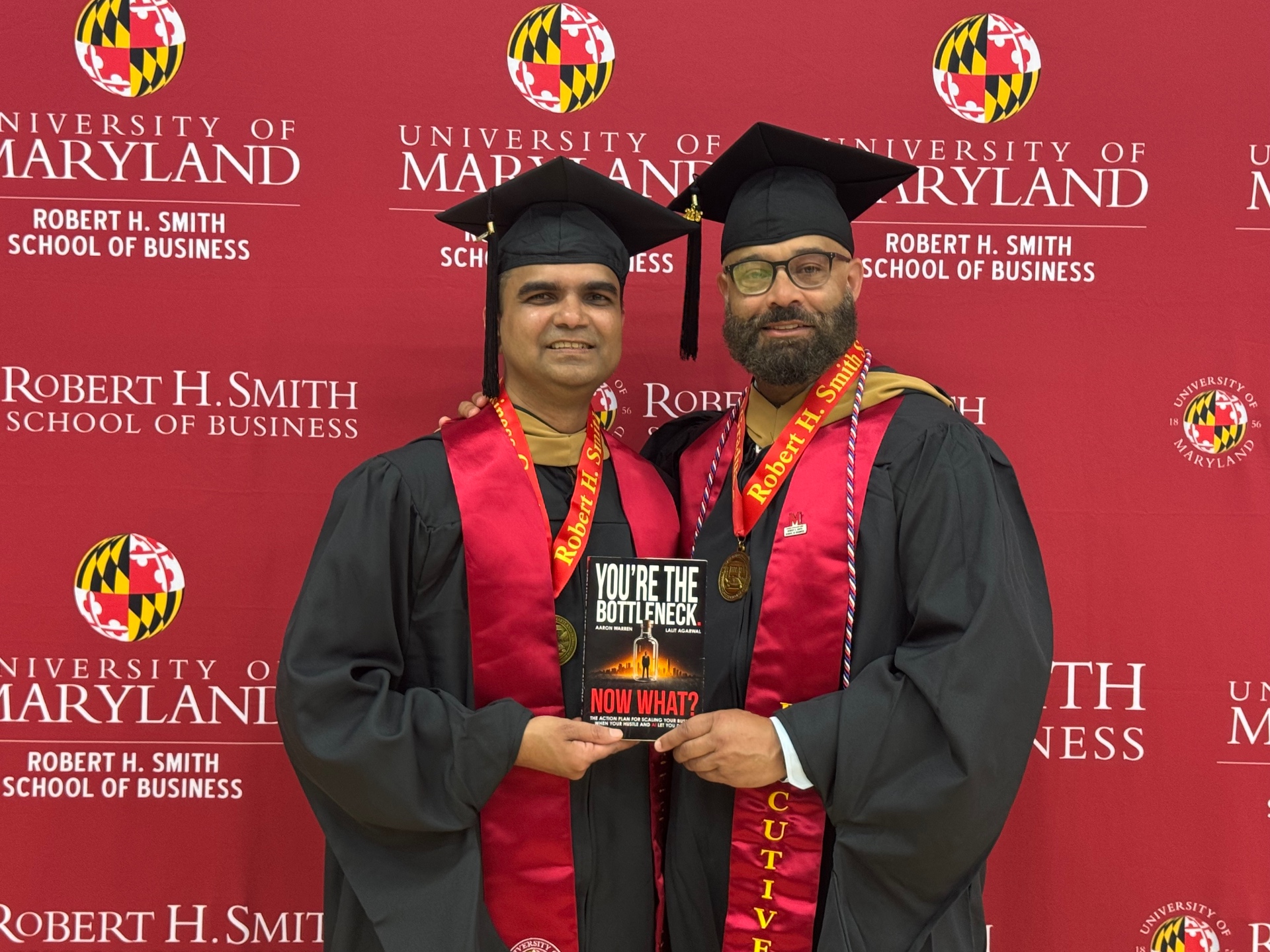
From Aaron Warren & Lalit Agarwal
Meet the authors →
Aaron Warren, EMBA — operated a $2M+ commercial cleaning company · CRESolutio · PropertyShield AI|Lalit Agarwal, EMBA — Data Engineering & GenAI Leader, Fortune 100 Financial Services
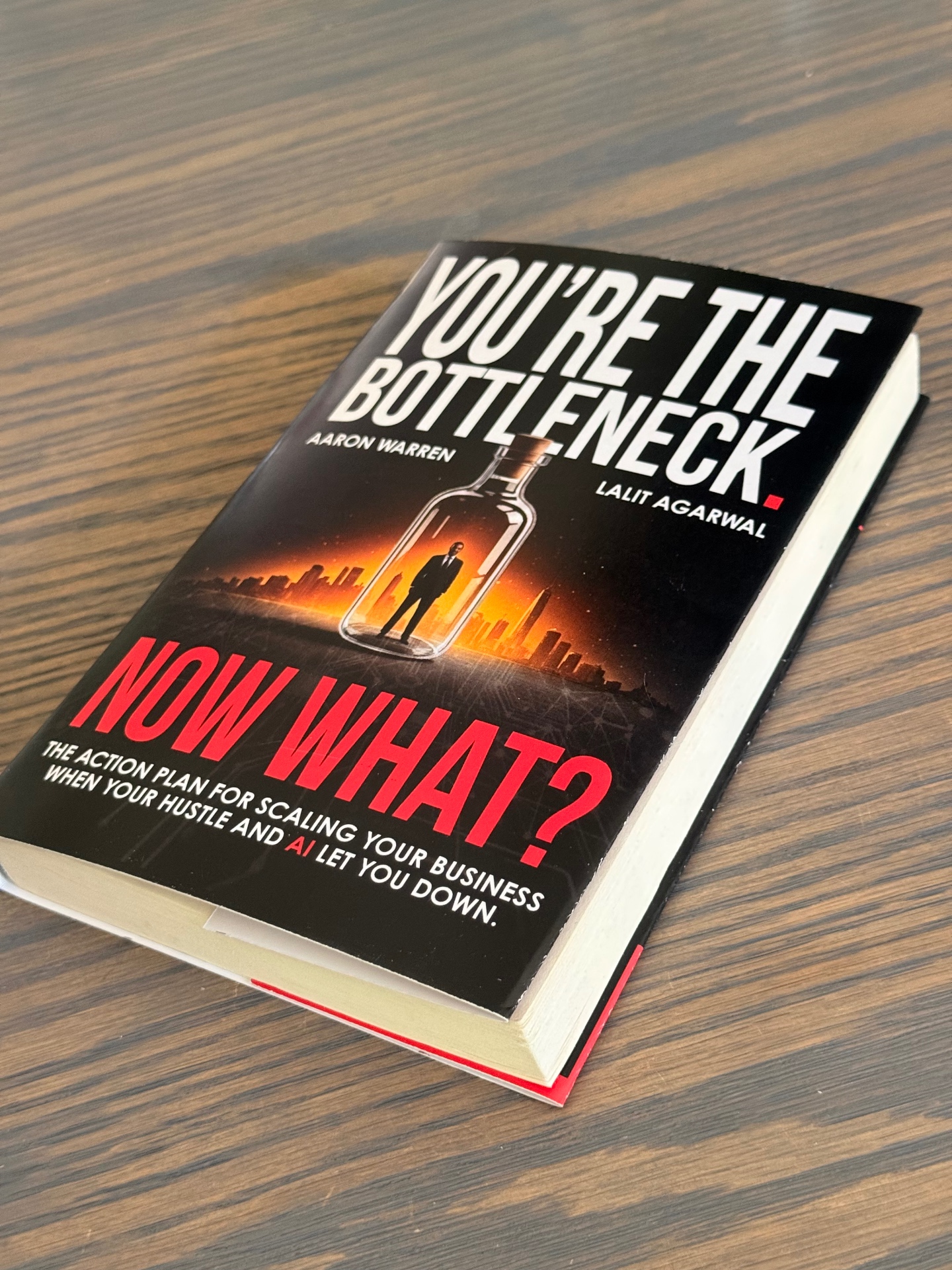 Summer 2026
Two columns, six lines each. If the left side sounds like the book you wanted, you're in the right place.
This is a structure book disguised as an AI book. AI is the urgency. Structure is the answer. A clear company gets sharper. A fragile one gets louder. This book is for leaders who refuse to confuse the two.
Most businesses don't fail for lack of hustle. They stall because complexity outgrows the business owner's coordination capacity. This book is the practical framework for building a company that holds — and an AI strategy that actually compounds on top of it.
Name the Effort-Dependence Trap inside your company — where growth keeps adding weight instead of leverage, and decisions keep routing back to you.
Outputs over roles, decision architecture, workflow clarity, and a cash flow engine that runs without your constant attention.
Technology amplifies a strong system and exposes a fragile one. Get the structure right, then let AI multiply it — not magnify the chaos.
The book closes with a diagnostic scorecard across three dimensions — a clear-eyed read on where your business runs on structure and where it runs on you. A preview of the questions you'll answer:
Included with the book · Free for waitlist readers
Reserve your ScorecardDo workflows run consistently when you're not paying attention — or does quality depend on you noticing?
Are decisions moving through defined pathways with clear owners — or routing back to the top by default?
Does cash flow surface on its own, on a rhythm — or only when you sit down and check?
Executive MBA classmates at the University of Maryland Robert H. Smith School of Business, Aaron and Lalit wrote You're the Bottleneck. Now What? together during the final six months of their Executive MBA program. Two perspectives, one conclusion: effort starts a business — structure decides whether it survives growth.
"You can hold a great deal together through will. The cost surfaces eventually — in late nights, constant checking, a background hum of vigilance that never quiets."
"In engineering, unclear ownership stalls work. Architecture isn't a preference — it's the difference between a system that holds and one that breaks under load."
Operated a $2M+ commercial cleaning company. Former owner of a residential and commercial construction company. Founder of CRESolutio and PropertyShield AI. Aaron writes from inside the trap — what it actually costs to hold a growing business together with willpower. Executive MBA classmate of Lalit's at Maryland Smith.
Data engineering and GenAI leader at a Fortune 100 financial services firm. Executive MBA from the University of Maryland, College Park, Robert H. Smith School of Business; Georgetown University. Lalit brings the architecture view — how structure, decision pathways, and clarity turn growth into leverage instead of pressure. Executive MBA classmate of Aaron's at Maryland Smith.
Construction · Commercial Cleaning · CRESolutio · PropertyShield AI · Fortune 100 Financial Services · University of Maryland College Park, Robert H. Smith School of Business · Georgetown University
You're the Bottleneck. Now What? is a business book for business owners and operators bringing AI into a real company. It's a strategy book first — the structural work that has to come before AI can actually compound. Releases Summer 2026, by Aaron Warren and Lalit Agarwal.
Join the waitlist and get the Structural Readiness Scorecard the day the book ships.